Four decisions Tribal broadband leaders should pressure-test before funding, engineering and partnership choices become harder to change.
Ackerman Consulting Group will be at the 2026 NTTA Tribal Broadband Southern Plains Regional Summit, September 21 to 23, in the Tulsa area.
We're going because the timing matters, and not just because of the summit.
Across Indian Country, funding windows are opening while leaders are making decisions with consequences that extend well beyond the grant cycle. The Tribal Broadband Connectivity Program Round 3 and the Native Entities Grant Program each carry application deadlines that are creating real urgency for Tribal broadband teams right now. (See the note at the end of this post about confirming current program details before making application or funding decisions.)
But a deadline creates urgency. It should not determine the project.
The strongest Tribal broadband strategies we've seen start with a community outcome, then align funding, engineering, sovereignty and eligibility around it. When the sequence runs the other way, when the available funding dictates what gets proposed, Tribes can end up designing around a grant instead of designing around their goals.
That's the conversation we're bringing to Tulsa.
Before committing to a funding strategy, Tribal broadband leaders should be able to answer four questions. Each becomes harder to revisit after funding decisions, partner agreements and engineering plans are in place.
- What Community Outcome Are We Solving For?
- What Is Technically Buildable, at What Cost and on What Timeline?
- What Control Does the Nation Want to Retain, and for How Long?
- What Does the Underlying Eligibility Evidence Actually Support?
1. What Community Outcome Are We Solving For?
A Tribe planning network construction has different needs from one focused on digital inclusion, workforce development or public access. In some cases, deployment and adoption may require related but distinct initiatives, each with its own scope, budget, evidence and implementation plan.
The project goal shapes which funding opportunity fits, not the other way around. Starting from the funding opportunity and working backward can produce a well-funded project that solves the wrong problem.
A grant deadline concentrates attention on what is possible before a window closes. The more important question is what the community needs broadband to accomplish, and whether the project being proposed is actually the right one.
At NTTA: How are Tribal teams evaluating today's funding opportunities against what their communities actually want to accomplish?
2. What Is Technically Buildable, at What Cost and on What Timeline?
Need alone doesn't make a project ready.
Moving from a community need to a buildable project requires technical decisions that affect the funding strategy, budget, schedule and long-term operation of the network. Those decisions should happen alongside the funding strategy, not after it.
When they happen in separate rooms, assumptions made for an application can collide with terrain, permitting, cost or operating realities. A strong project team should be able to answer:
- Which locations are within the proposed service area, and what evidence supports that definition?
- What network approach fits the terrain, density, community priorities and anticipated operating model?
- What assumptions are driving the construction budget?
- Which permitting, land-status or environmental considerations may affect the schedule?
- What governance and operational capacity will be needed after construction?
Funding strategy and engineering shouldn't happen in separate rooms. Bringing technical work into the strategy early gives Tribal leaders a clearer view of what's buildable, what it may cost and what tradeoffs they're actually making.
At NTTA: Where are Tribal teams encountering readiness bottlenecks, and what's helping them move from opportunity to an actionable plan?
3. What Control Does the Nation Want to Retain, and for How Long?
A network design, partner structure or funding approach that looks efficient today can create long-term dependencies that don't fit a Tribe's goals for autonomy, resilience, pricing or data governance.
Depending on the Nation's goals, the right answer may mean pursuing network ownership, setting stronger governance expectations within a partnership, building internal capacity over time or choosing an operating model that preserves meaningful local control. There's no universal template.
But the answer should come before technical and commercial choices become fixed. The most consequential broadband decisions aren't always about speed, coverage or construction timelines. They're about sovereignty. And sovereignty is much easier to define before a design, a partner agreement or a funding structure is already in place.
A deliberate broadband strategy connects infrastructure investment to larger community priorities, education, healthcare and economic development. That connection is harder to establish once the architecture and partner agreements are already locked in.
At NTTA: How are Tribal leaders defining broadband success for their communities, and how is that definition shaping the decisions that follow?
4. What Does the Underlying Eligibility Evidence Actually Support?
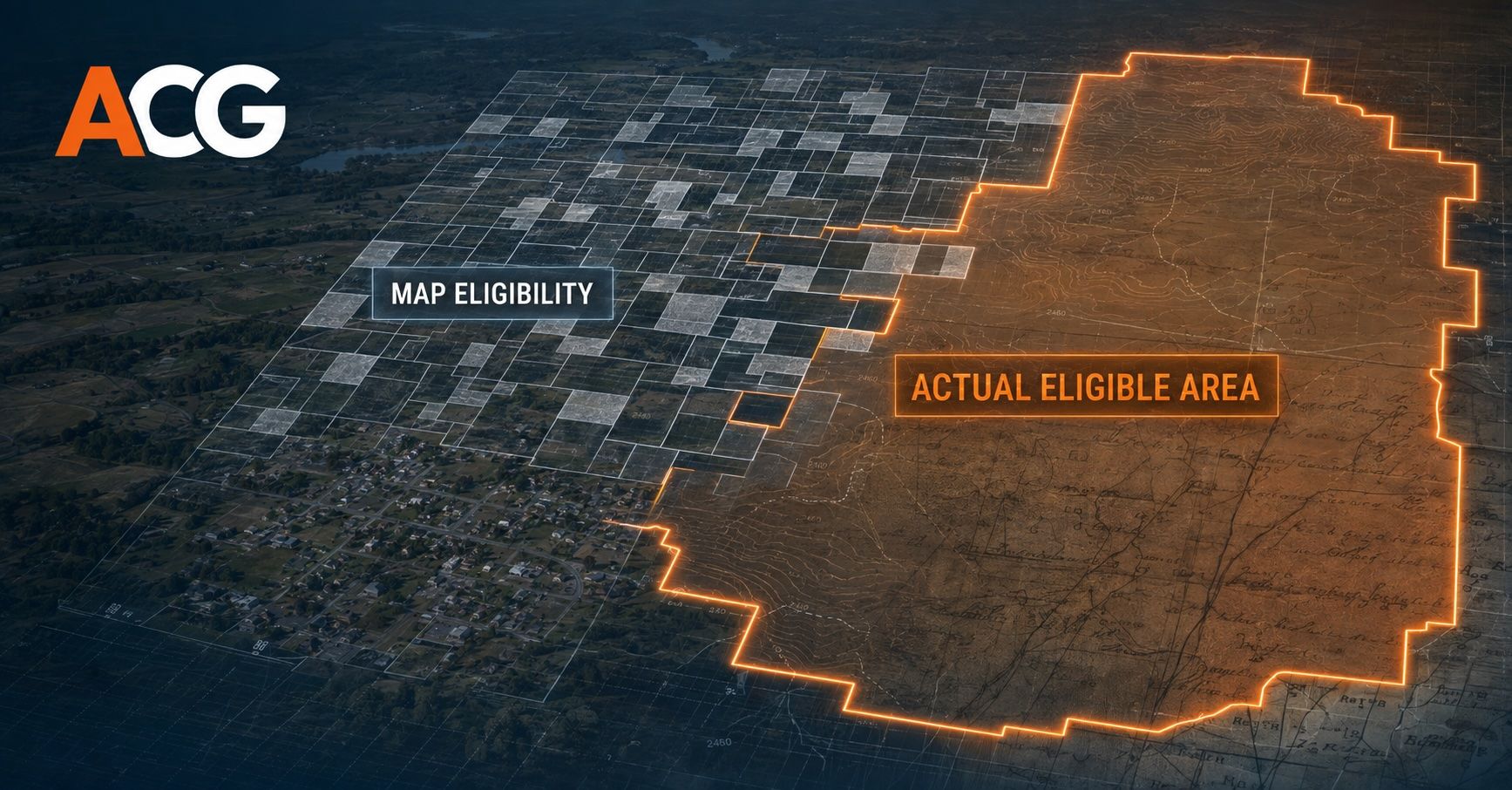
For many Tribal broadband projects, the proposed service area is more complicated than a line on a map. Checkerboard land patterns, land-status questions, overlapping jurisdictions and differences in how Tribal Lands are defined for specific federal programs can affect both eligibility and construction planning.
These aren't reasons to delay a project. They're reasons to begin diligence early, because the evidence matters and the evidence can be changed by the work you do.
We've seen this directly.
In one Tribal broadband project, the initial service-area map suggested that only part of the proposed footprint qualified as Tribal Lands under the applicable federal funding program. Rather than accept that boundary, our team researched historical treaty documentation and the agency's applicable definitions, built the case and brought it to the agency.
The result: the agency recognized the entire county as qualifying Tribal Lands, significantly expanding the eligible project footprint and materially changing what the Tribe could propose.
The map is an important starting point. It isn't always the final answer. The difference between what the map shows and what the evidence supports can be the difference between a partial project and the right one.
At NTTA: What eligibility or service-area questions are Tribal teams working through, and what evidence would help resolve them?
Read the full project story: How Treaty Research Expanded One Tribe's Broadband Eligibility — ackermancg.com/projects-tribal-funding
Bring the Decision You're Working Through
Ackerman Consulting Group works with rural, Tribal and public-sector teams on broadband planning, engineering, funding support, permitting, construction readiness and project delivery.
The strongest broadband strategies connect community goals, funding and buildable engineering from the beginning, before the decisions that are hardest to change have already been made. That's what we try to bring to every project.
If you're headed to NTTA, bring the broadband decision your team is working through. We'd like to hear what's creating friction: funding fit, engineering readiness, service-area eligibility or long-term control. That's a more useful conversation than a general overview of what we do, and it's why we're going.
Hope to see you in Tulsa.
Note on program details:For current information about TBCP Round 3, the Native Entities Grant Program, eligible uses, application requirements and deadlines, consult the official NTIA program notices before making funding or application decisions. ntia.gov/funding-programs/internet-all/tribal-broadband-connectivity-program