
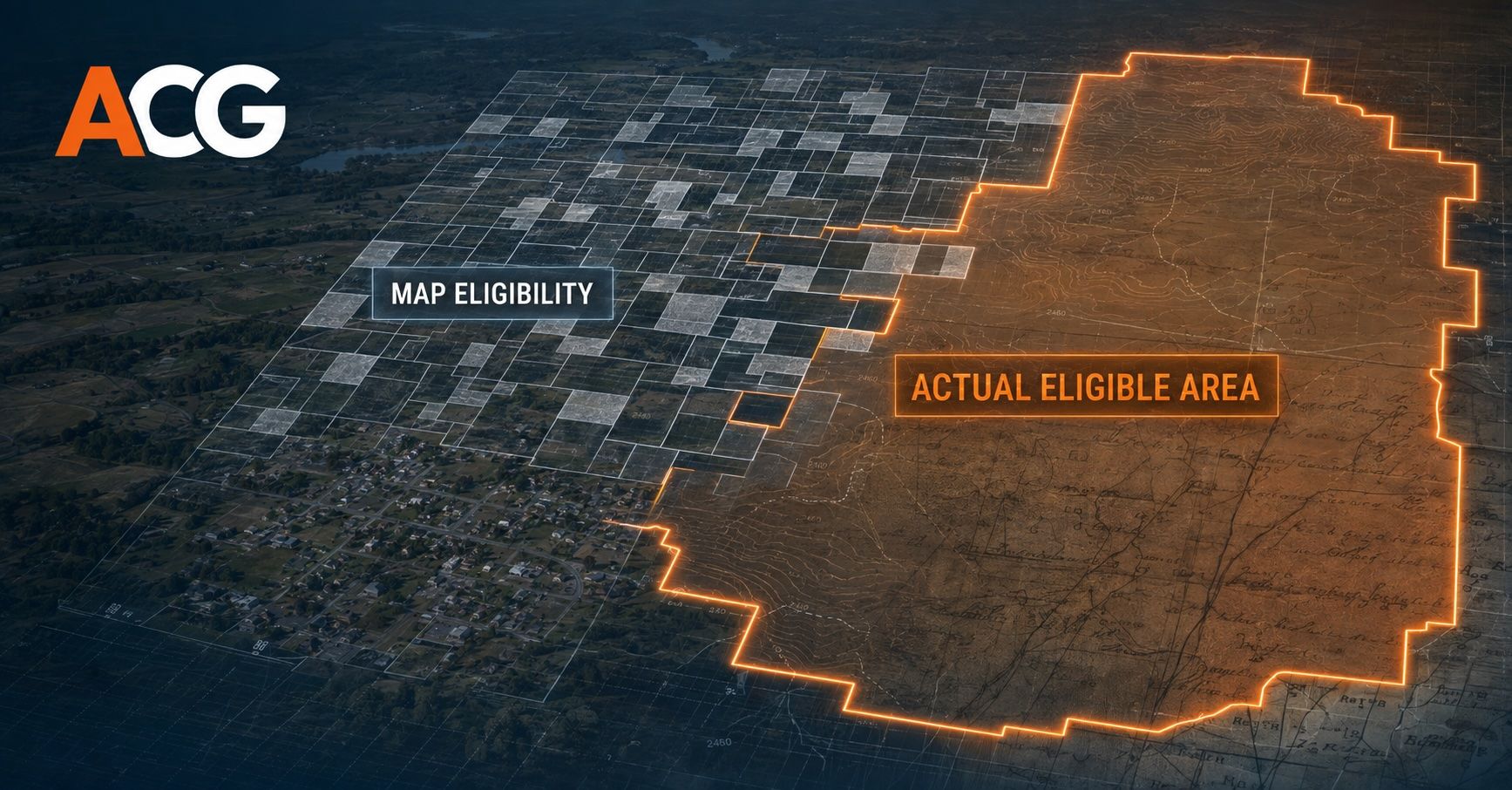
If your reservation has a checkerboard pattern, you already know the headache it creates. Trust land here, fee land there, jurisdiction that shifts parcel by parcel. It's confusing enough for day to day governance. When it comes to federal funding eligibility, it can cost you.
We saw this firsthand with a Tribal client whose reservation followed exactly this kind of fractured pattern. The need for broadband wasn't in question. What was in question was whether the Tribe's full service area qualified under a special Tribal funding category, one that carried meaningfully better terms than the standard program. Based on the map alone, the answer looked like no.
We didn't take the map at face value. Our team dug into the historical treaty documentation and the federal agency's own interpretation of what counts as Tribal Lands. That research built a clear regulatory and jurisdictional case for eligibility across the Tribe's broader service area, not just the parcels that looked obviously eligible on paper.
We brought that case directly to the agency. The result: the agency recognized the entire county as qualifying Tribal Lands for the funding program. That single determination expanded the Tribe's eligible footprint well beyond what anyone had assumed going in, and it meant the project could move forward at a scope and funding level the original map never suggested was possible.
Read the full project story: How Treaty Research Expanded One Tribe's Broadband Eligibility
Here's why this matters right now. NTIA's TBCP Round 3 and the Native Entities Grant Program are open, with a new November 17, 2026 deadline. If your reservation has a complicated boundary history, checkerboarding, allotment land, disputed jurisdiction, don't let an outdated or oversimplified map make that determination for you. The definition of Tribal Lands that federal agencies apply is often broader, and more negotiable, than what shows up in a standard GIS layer. Knowing that before you submit can change what you're eligible to apply for.
If you're not certain your full service area is reflected accurately in your funding eligibility, it's worth a conversation before you finalize your application.


